Classic 2048 Games – Play Free Online
Explore Classic 2048 Games online, including the original 4×4 puzzle, themed tile sets, larger boards, and competitive variations.

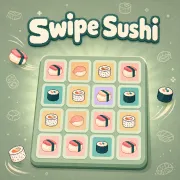

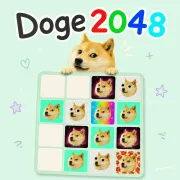
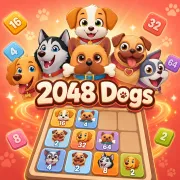
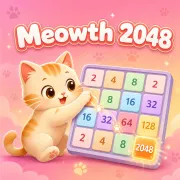
Classic 2048 Games bring together number puzzles that preserve the familiar slide-and-merge system. Move every tile in one direction, combine matching values, and protect the remaining space as the board becomes increasingly crowded. Start with the original 4×4 number grid or explore themed editions that replace numbers with fruit, animals, desserts, letters, and other images while keeping the same strategic foundation.
What Defines a Classic 2048 Game?
A Classic 2048 game is built around global board movement. When you swipe or press a directional key, every available tile moves as far as it can in the chosen direction. Two matching tiles that meet become one higher-level tile.
This rule separates Classic 2048 from other merge games. You do not drop individual objects, shoot blocks, guide a running character, or move pieces independently. Each input changes the complete board, so creating one useful merge can also disrupt another part of your layout.
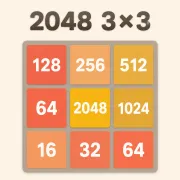
Most traditional versions use a 4×4 grid, although some variations introduce larger boards, themed tile sets, alternative goals, or competitive modes. As long as the game retains the same sliding system and space-management challenge, the skills learned in the original version remain useful.
How the Slide-and-Merge System Works
A round begins with a small number of low-value tiles. Use the arrow keys, WASD, or swipe controls—depending on the selected game—to move the board up, down, left, or right.
When two matching tiles collide, they combine into the next value:
- Two 2 tiles create a 4.
- Two 4 tiles create an 8.
- Two 8 tiles create a 16.
- The sequence continues through 32, 64, 128, 256, 512, 1024, and 2048.
In the standard rules, a tile can normally merge only once during a single move. After a valid slide, a new low-value tile appears in an empty cell. The board therefore gains another obstacle even when your move creates space.
The main milestone is the 2048 tile, but many versions allow you to continue building 4096 and higher values. A round ends when the grid is full and no adjacent matching tiles can be brought together.
Choose the Right 2048 Style
Begin With the Original 4×4 Board
Classic 2048 4×4 offers the clearest version of the puzzle. Numbers show the exact value of every tile, making it easier to calculate future merges and learn how movement affects the grid.
The compact board leaves little room for unnecessary moves. It is the best starting point for learning corner control, ordered tile chains, and long-term space management.
Discover Themed Tile Sets
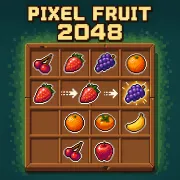
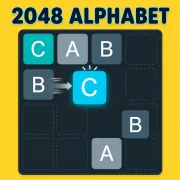
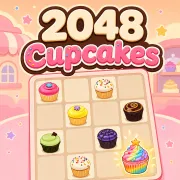
Themed versions keep the familiar rules but replace plain numbers with images. In 2048 Cupcakes, matching desserts unlock increasingly elaborate cupcakes. Pixel Fruit 2048 follows a fruit evolution chain, while 2048 Alphabet turns matching letters into the next character in the alphabet.
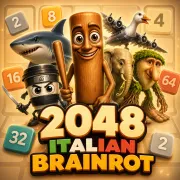
Games such as Doge 2048, 2048 Dogs, Taylor Swift 2048, and 2048 Italian Brainrot also use visual progressions. These editions add variety without removing the need to plan each move.
Because some themed games do not display numerical values clearly, learning the image order becomes part of the challenge. Knowing which tile comes next helps you arrange potential combinations before the grid becomes crowded.
Try Larger Boards and Competitive Variations
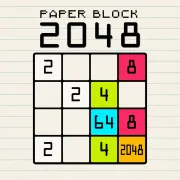
Some games expand the format while retaining the central slide-and-merge rule. Paper Block 2048 offers 4×4, 5×5, and 6×6 boards, allowing you to choose between a compact puzzle and a longer session with more room to develop tile chains.
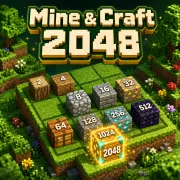
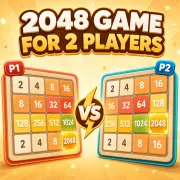
Mine & Craft 2048 uses a 5×5 grid and represents higher numbers with increasingly valuable resources. 2048 Game For 2 Players places two independent 4×4 boards side by side, turning careful planning into a race against another player.
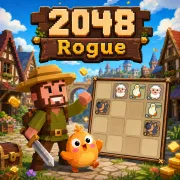
2048 Rogue adds Story and Endless modes while preserving the familiar whole-board movement. These variations change the presentation, board size, or objective without abandoning the strategic logic of Classic 2048.
Strategies for Building Higher Tiles
Keep Your Largest Tile in One Corner
Choose a corner early and avoid moving your largest tile away from it unnecessarily. This creates a stable anchor for the rest of the board.
Arrange Values in a Clear Order
Build a descending sequence along the edge beside your strongest tile. An organized line such as 128, 64, 32, and 16 is easier to combine than valuable tiles scattered across different rows.
Protect Empty Cells
Open spaces give you room to reposition smaller tiles and correct an inconvenient spawn. When only one or two cells remain, prioritize moves that create space rather than merges that leave the board equally crowded.
Limit Risky Direction Changes
If your strongest tile is in a bottom corner, repeatedly moving upward can break your structure. Use the directions that keep your main row or column intact, and change course only when the board requires it.
Consider the Resulting Position
Do not evaluate a move only by the merge it creates. Check where the new tile will land, which values will become separated, and whether the resulting board supports another combination.
Play Classic 2048 Games Online
Begin with Classic 2048 4×4 to learn the original rules, then try a themed board or a larger-grid variation. Every version rewards the same core habits: control one corner, arrange tiles in order, preserve open space, and make each slide support the next one.
Choose a game from the collection and see how far you can extend the merge sequence beyond 2048.