








Be the first to comment
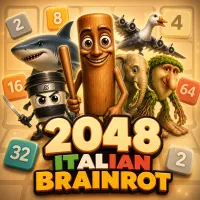
2048 Italian Brainrot transforms the familiar number-merging formula into a colorful parade of viral meme characters. The game retains the simple rules that make 2048 easy to understand, but replaces its plain appearance with strange creatures such as Chimpanzini Bananini, Tralalero Tralala, and other recognizable Brainrot personalities.
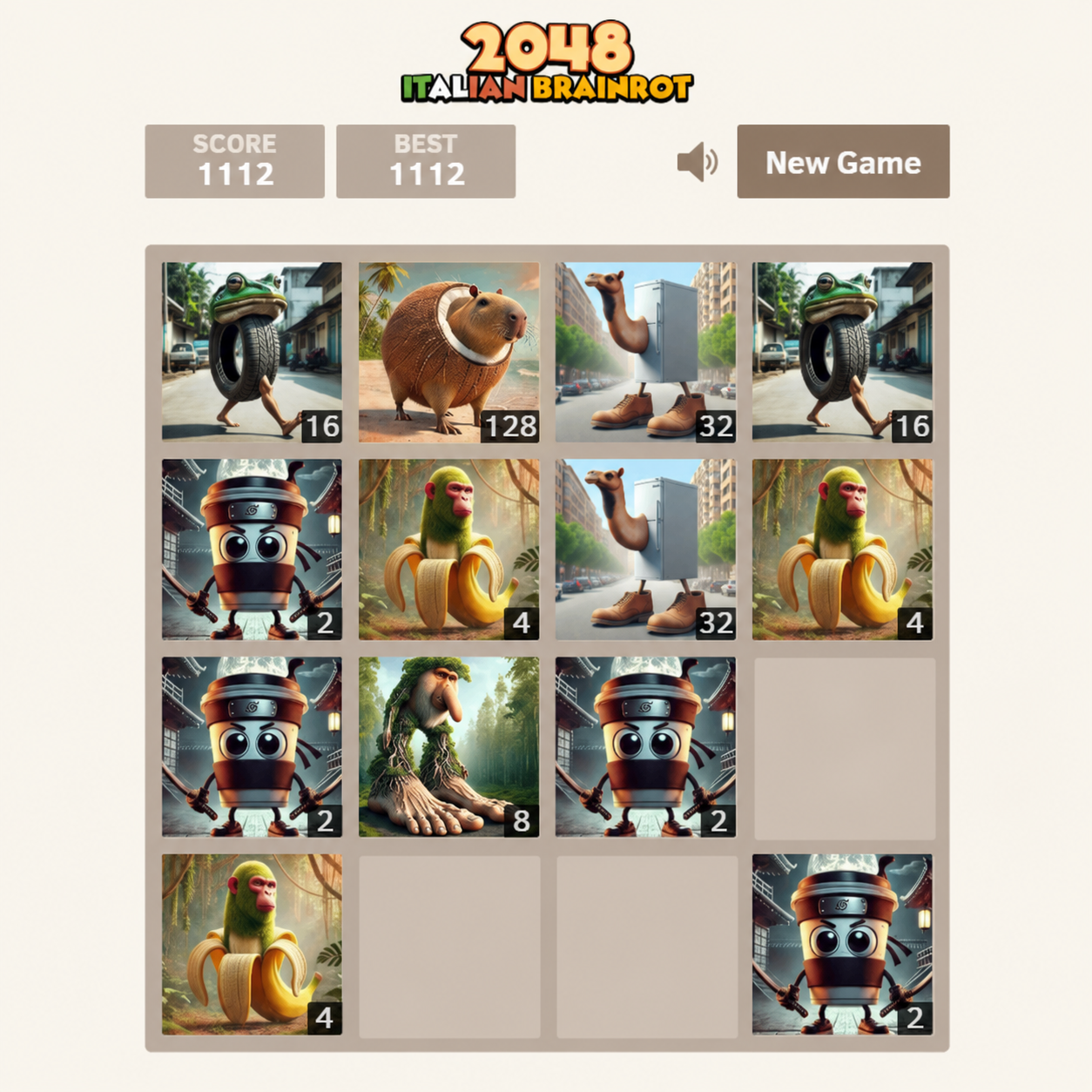
Each character tile still displays a numerical value, allowing you to follow its position in the merge sequence. However, discovering what appears next adds an extra incentive to continue. Reaching a higher tile is no longer only about increasing your score—it also reveals another bizarre character for your growing collection.
The uncluttered 4×4 board keeps the action readable, while the Score and Best counters let you track your current performance and personal record.
 What are you waiting for? Play now!
Every turn moves all tiles across the board in one direction. When two identical characters meet, they combine into a more valuable tile and award points. For example, merging two value-2 characters produces a value-4 character, which can later be paired with another matching tile.
A new character appears after almost every move, so empty spaces gradually disappear. The challenge comes from organizing the board faster than it fills. If no matching pairs remain and none of the tiles can move, the round ends.
Although the rules are simple, each slide affects the entire grid. Moving one pair into position may separate another, while an unnecessary swipe can place a low-level character in a difficult corner. Successful runs therefore depend on planning several merges ahead instead of chasing every immediate combination.
Choose a corner and guide your highest-value tile toward it. Keeping that character anchored gives the rest of the board a clearer structure and reduces the chance of trapping smaller tiles behind it.
Arrange other characters in descending order beside your strongest one whenever possible. This creates a natural path for new tiles to move through the merge chain.
Open cells give you room to reorganize the board. Avoid filling every row with unrelated characters, even if a quick merge is available elsewhere. A move that creates space is often more useful than one that provides only a few immediate points.
Try to combine smaller tiles early so they do not become scattered across the grid. When the board starts feeling crowded, examine all four directions before making the next move. One careful slide may create several consecutive merges and rescue the run.