












Be the first to comment
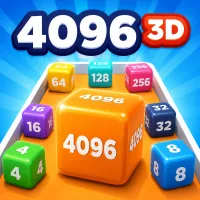
4096 3D turns number merging into a physics puzzle built around aim, impact, and space management. Launch numbered cubes into the tray, combine equal values, and work through the doubling sequence until you create 4096.
Every turn begins with a numbered cube ready to launch. Hold and move the pointer to choose its direction, then release to send it into the tray. Two cubes carrying the same value merge on contact and produce the next number: 2 becomes 4, 4 becomes 8, and the sequence continues through 2048 to 4096.
The current merge is only part of the decision. You must also consider where the new cube will settle and how its movement may affect the rest of the pile. A poorly aimed shot can push useful blocks apart or trap a valuable number behind unrelated cubes.
The cubes roll, rebound, and displace one another after impact. Direct shots are dependable when the path is clear, while wall rebounds can reach matches hidden behind other blocks. Crowded areas are harder to predict because one collision may shift several cubes at once.
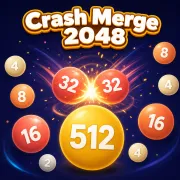
These reactions can also work in your favor. If two 16 cubes form a 32 and immediately touch another 32, the board produces a 64 in the same sequence. Such chain merges increase the score and clear several blocks with one throw.
Limited space creates the main challenge. Unmatched cubes remain in the tray, gradually restricting your angles and blocking access to useful numbers. The run ends when the pile reaches the marked danger area.
Keep matching values close enough to connect, but leave room for incoming cubes to travel. An open lane through the center provides safer shots toward the back of the tray. High-value cubes should remain accessible because burying them under smaller numbers can delay progress and consume valuable space.
There is no time limit, so careful planning is more valuable than rapid throwing. As the pile grows, controlled placement and board recovery become increasingly important.