















Be the first to comment
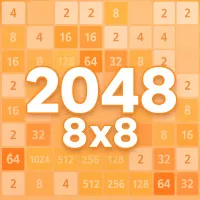
2048 8x8 brings the familiar number-merging puzzle to a much larger grid. Combine equal tiles, organize the board carefully, and build higher values through well-planned moves.
2048 8x8 uses an 8×8 grid with 64 cells, creating far more room for movement and long merging chains.
The main rule is simple. Two tiles with the same value combine to form the next number:
2 + 2 = 4 → 8 → 16 → 32 → 64 → 128 → 256 → 512 → 1024 → 2048
The larger board gives you more time to develop your position, but it also allows many small tiles to build up across different rows and columns. Keeping related numbers close together becomes increasingly important during longer runs.
Use the arrow keys to move all available tiles in one direction. Equal numbers merge when they meet during the move.
Each input affects the entire grid, so you need to consider more than the nearest pair. A merge may create a useful high-value tile, but its final position can determine whether it will be easy or difficult to combine again later.
The early game usually offers plenty of open cells. This makes small mistakes easier to recover from. As more tiles appear, poor placement becomes harder to fix, especially when several low numbers separate your strongest tiles.
The 64-cell layout creates a different type of challenge from smaller 2048 boards.
Space is rarely the main problem at the beginning. The bigger challenge is keeping the board structured while several number chains develop at once.
Small tiles can spread across multiple rows while high-value tiles grow in different areas. Later in the run, two matching 512 or 1024 tiles may be separated by many smaller numbers, making them difficult to reconnect.
Long rows and columns can also create powerful multi-step merges. A single move may combine several pairs and open space at the same time, but these chains work best when similar values are already positioned near each other.
Keeping one area of the board organized from the beginning makes high-value merges much easier to prepare.
Creating the 2048 tile is an important milestone, but the run can continue while valid moves remain.
You can keep combining equal tiles to reach 4096, 8192, 16384, and higher values.
At this stage, every large merge takes more preparation. Protecting open cells becomes more important, and separating two high-value matching tiles can cost many moves.
The challenge gradually shifts from reaching 2048 to seeing how far you can extend the number chain before the grid becomes too crowded to continue.
2048 8x8 is a number-merging puzzle played on an 8×8 grid. Equal tiles combine to create progressively higher values.
The board has 64 cells, giving players much more room to move and organize tiles.
The larger grid offers more space to recover from mistakes, especially early in the game. Longer runs still require careful organization because many more tiles can accumulate.
Keep your highest tiles in one area, place similar values close together, preserve open cells, and avoid moves that scatter your number chain across the board.
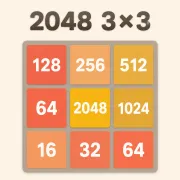
You can try other grid sizes such as 2048 3x3, 2048 4x4, 2048 5x5, and 2048 6x6. Smaller boards feel tighter and require faster space management, while larger grids give you more room to build longer merging chains.