
















Be the first to comment

2048 Solitaire combines the number-doubling system of 2048 with strategic card placement. Instead of sliding tiles across a grid, you drag numbered cards into four columns and merge identical values to create stronger cards.
The objective is to reach 2048 without allowing every column to fill. Since placed cards cannot be freely moved between stacks, every decision can open a valuable combination or create a difficult obstacle.
The current card appears at the bottom of the screen, with the next card visible behind it. Drag the active card into one of the four columns to begin building your stacks.
When two identical cards touch, they automatically merge into the next power of two. Two 4 cards form an 8, two 8 cards create a 16, and the sequence continues through 32, 64, 128, 256, 512, 1024, and 2048.
A newly formed card may match the one beneath it, creating another merge. Preparing these chain reactions helps you build larger values, clear space, and earn score multipliers.
Each card increases the height of its chosen stack. When a column reaches the danger line, it can no longer accept a regular card. However, you may still place a matching card there if it immediately triggers a merge and reduces the stack.
The game ends when all four columns become blocked. Reaching 2048 is the primary goal, but you can continue playing afterward to create even larger cards and improve your high score.
2048 Solitaire includes several tools that can rescue a difficult run:
These features provide useful flexibility, but careful column management remains the most reliable way to survive.
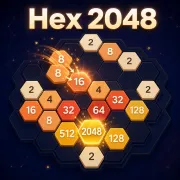
If you enjoy 2048 Solitaire, try Crash Merge 2048 for physics-based combinations, Hex 2048 for tactical merging on a hexagonal board, or Rhythm Merge for a faster puzzle experience with musical elements. Each game keeps the familiar doubling system while introducing a different way to reach larger numbers.